Minutes From Help: Mapping the Counties Where Volunteer Ambulance Crews Carry the Load
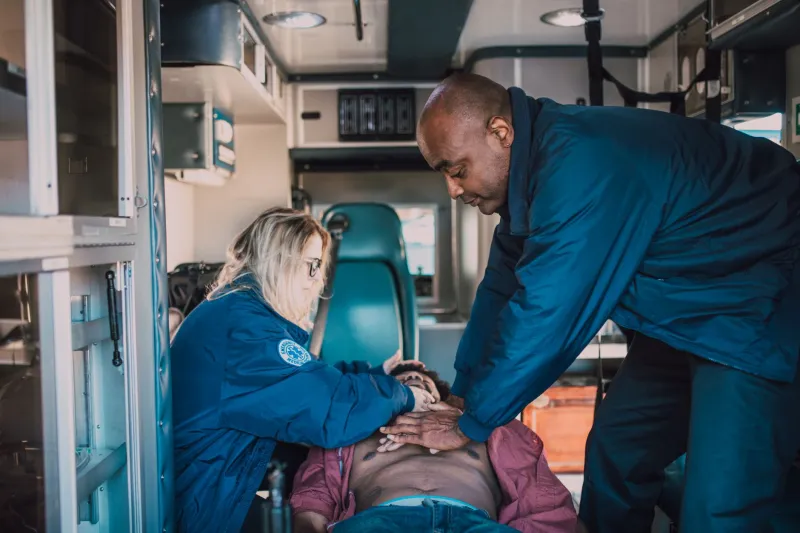
The First Responder May Be a Neighbor
On the map of American emergency care, the most important line is not always a highway or a hospital route. In many counties, it is the distance between a patient and the nearest available ambulance crew—and in a shrinking number of places, that crew may be entirely volunteer.
Global Awareness Map’s focus on the volunteer ambulance gap begins with a simple question: where does the “golden hour,” the widely used benchmark for getting seriously injured or acutely ill patients to definitive care, depend on an aging and thinning roster of unpaid responders? The answer is not a single region or a single story. It is a patchwork of rural counties, small towns, and outer suburban fringe communities where the emergency medical services (EMS) model was built for a different era of population, volunteering, and hospital access.
This is not a argument against volunteer EMS. It is an attempt to see clearly where the model is under strain, and what that strain means for patients who cannot choose the county they live in.
Why the Volunteer Model Matters
Volunteer and combination EMS agencies have long been part of the U.S. emergency system. In many communities, they are not a backup; they are the primary 911 medical response. That arrangement can work well when call volumes are modest, training is strong, and enough residents can staff shifts around jobs and family obligations.
But the model is sensitive to time. A volunteer crew must be recruited, trained, equipped, dispatched, and assembled. In dense areas, a paid crew may already be in quarters. In sparsely populated areas, the volunteer model may be the only practical way to place an ambulance within reach.
The fragility appears when several pressures arrive at once: fewer volunteers, an older volunteer base, longer distances to hospitals, and closures or consolidations of nearby emergency departments. Each factor is manageable in isolation. Together, they can turn a routine call into a race against geography.
What the Map Would Show
The project’s mapping approach is straightforward in concept and difficult in practice. It would overlay four layers.
First, the EMS delivery model: counties and service areas where volunteer agencies are the primary response, where they are part of a combination system, and where paid staff handle most calls.
Second, the volunteer roster profile: not just how many volunteers exist, but how old they are, how many are active, and whether recruitment is keeping pace with attrition. A roster of 30 names can be misleading if only eight people regularly answer calls.
Third, hospital access: the distance and travel time to the nearest emergency department, including facilities that have closed or converted services in recent years. Hospital closures are a past and present reality in rural America; each closure changes the practical meaning of the golden hour for surrounding counties.
Fourth, response-time thresholds: the share of calls where an ambulance arrives within locally defined targets, and where those targets are already stretched by geography. A county may meet its own standard while still being far from the nearest trauma center or cardiac catheterization lab.
When those layers are combined, the map does not simply show “rural.” It shows places where the emergency system is doing more with less, and where the margin for error is narrow.
The Aging Roster and the Closing Door
The volunteer shortage is often described as a recruitment problem. It is also a retention and demographics problem. Many volunteer crews depend on people who joined decades ago and have stayed through retirement age. As those volunteers age out, replacing them is difficult. Younger residents may commute, work irregular hours, or face training and licensing requirements that are hard to fit into already crowded schedules.
At the same time, the call mix has changed. Volunteer agencies increasingly respond to complex medical calls, not just accidents and fires. That demands more training, more continuing education, and more time away from work and family.
The result is a quiet consolidation. Smaller agencies merge with neighbors. Paid staff cover daytime hours while volunteers cover nights and weekends. A county that once had three ambulances may now have one, stationed farther away. These arrangements can preserve service, but they also lengthen response times and reduce redundancy when the first crew is already on another call.
What Consolidation Means for Patients
Consolidation is not inherently bad. Regional systems can share equipment, training, and administrative costs. But the patient experience of consolidation is measured in minutes and miles. If the nearest volunteer station closes and the next one is 20 minutes farther away, the golden hour shrinks before the ambulance even reaches the driveway.
That matters most for time-sensitive conditions: cardiac arrest, stroke, severe trauma, and obstetric emergencies. It also matters for older residents in remote areas, who may rely on EMS not only for accidents but for falls, respiratory distress, and other acute episodes.
The policy question is not whether volunteer EMS should exist. It is whether the communities that depend on it have a realistic plan for staffing, funding, and response-time coverage as the volunteer base changes.
How to Check Your County’s EMS Model
Residents can learn a great deal without waiting for a crisis. Start with the county or regional EMS authority, the local fire department, and the agency that handles 911 medical dispatch. Ask a few precise questions:
- Is our ambulance service paid, volunteer, or a combination?
- How many ambulances are staffed overnight and on weekends?
- Where are they stationed, and what is the average response time by area?
- How many active volunteers does the agency have, and what is the trend over the past five years?
- What is the nearest emergency department, and has that changed in the past decade?
These questions are public-interest questions, not accusations. Local officials and agency leaders often welcome them, because they reveal the gap between the system on paper and the system at 2 a.m.
What Citizens Can Do Before the Next Emergency
Action does not require a uniform. Residents can support local EMS by attending county board and EMS authority meetings when budgets and service plans are discussed. They can ask whether volunteer recruitment and retention are funded, not just celebrated. They can support training partnerships with community colleges and hospitals. They can learn CPR and stop-the-bleed skills, which buy time before any ambulance arrives.
For those who can serve, volunteer agencies need more than emergency responders. They need dispatchers, equipment checkers, fundraisers, and administrative help. For those who cannot serve, paying attention is still a form of service: knowing your county’s EMS model is the first step toward asking whether it is ready for the next call.
The golden hour is not only a clinical concept. It is a map of who can reach whom, and how quickly. In places where the answer depends on a graying volunteer roster, that map deserves a closer look.