The Faucet Audit: Mapping What U.S. Schools Know About Lead in Drinking Water
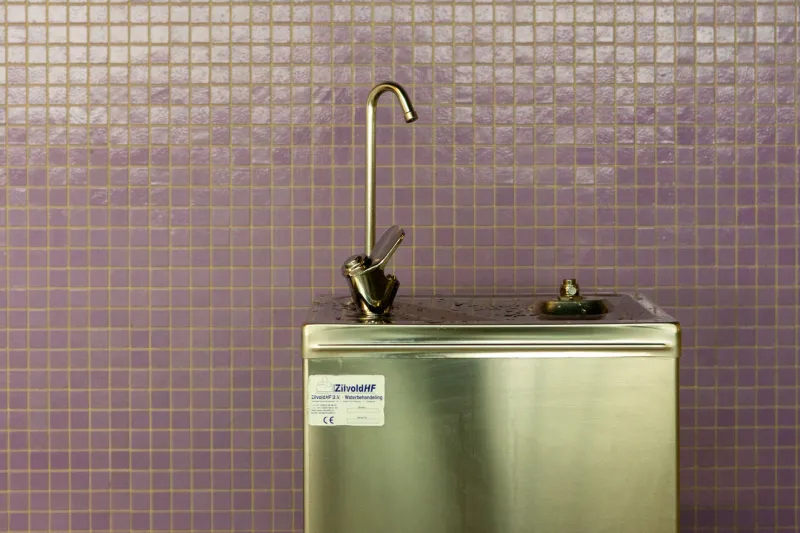
A school drinking fountain is easy to ignore until someone asks what is inside the water. For most U.S. families, that question has no simple answer. Lead testing in school drinking water is not governed by one uniform national rule that covers every faucet and every district. It is shaped by state laws, local decisions, federal guidance, building age, plumbing materials, and the willingness of a school system to publish what it learns.
That patchwork is the starting point for a different kind of map: not a map of confirmed contamination, but a map of public knowledge. Which districts have tested? Which have not? Where are results posted in a form a parent can find? Which schools have old plumbing, young children, and limited capital budgets? And after a test finds lead, who pays to fix the fixture, the pipe, or the service line?
For Global Awareness Map, the unit of analysis is not a single alarming sample. It is the distance between what a school system knows and what the public can see.
A Patchwork of Requirements
Federal environmental law regulates public water systems, but it does not mandate testing at every school drinking water outlet in the country. The U.S. Environmental Protection Agency’s 3Ts guidance — Training, Testing, and Telling — is a voluntary framework. It recommends that schools learn about their plumbing, sample outlets, and communicate results. Some states have turned parts of that approach into requirements. Others rely on grants, encouragement, or district initiative.
The result is uneven. A student in one state may attend a school that tests every fountain on a regular schedule and posts results online. A student in a neighboring state may attend a school where testing happens only after a complaint, a renovation, or a grant award. Both may be served by a public water system that meets federal standards at the treatment plant, yet both may have lead in the building’s internal plumbing.
That distinction matters. Lead can enter drinking water after it leaves the main. Solder, brass fixtures, fountains, and service lines can contribute. Buildings constructed before the 1986 ban on lead solder in plumbing are often a focus, but age alone is not a prediction. Partial replacements and stagnant water can complicate the picture. Testing is how a district replaces assumption with evidence.
What a Transparency Map Would Show
A useful school lead map would layer several kinds of information. The first layer is testing status: whether the district has sampled, when, at how many outlets, and under what rule or program. The second is public access: whether results are posted prominently, buried in board packets, or available only through a records request. The third is building and plumbing context: construction dates, renovation history, and known lead service lines.
The fourth layer is child vulnerability. Lead exposure is not evenly distributed. Children in poverty are more likely to live in older housing and attend schools with deferred maintenance. They may also have less access to testing and follow-up care. No safe blood lead level in children has been identified, according to the Centers for Disease Control and Prevention, so prevention is the central public health tool.
Overlaying these layers would not prove that a given school is unsafe. It would show where the public lacks the information needed to judge. That is a different and more actionable finding. A district with no testing record and old plumbing is not necessarily contaminated, but it is unmeasured. A district with testing results and a remediation plan is not necessarily finished, but it is accountable.
The Plumbing Behind the Report
School water systems are not miniature municipal utilities. They are buildings with complex internal networks: kitchens, nurses’ offices, gymnasiums, classrooms, and fountains that may sit unused for weeks. A single test result can reflect the fixture, the branch line, the service line, or the water sitting overnight. Proper sampling protocols matter, and so does follow-up.
Remediation can be as simple as removing a fountain or installing a filter. It can also be as costly as replacing internal piping or a lead service line. The EPA’s Lead and Copper Rule Improvements, finalized in late 2024, sharpened requirements for water systems to inventory lead service lines and plan replacements over time. Those rules affect the utility side of the equation. They do not automatically renovate every school’s internal plumbing.
That gap is where local budgets meet public health. A district may be able to afford testing through a federal grant, such as those established under the Water Infrastructure Improvements for the Nation Act of 2016, and still struggle to fund permanent fixes. The Bipartisan Infrastructure Law of 2021 provided substantial funding for lead service line replacement and school testing, but the money is not infinite, and the need is distributed unevenly.
Funding the Fix, Not Just the Test
Testing without a remediation path can create a different kind of risk: a report that frightens parents but changes nothing. The strongest school programs pair sampling with clear action levels, immediate shutoff or filtering, parent notification, and a capital plan. They also say plainly what is still unknown.
In 2026, the accountability question is not only whether a district has tested. It is whether the district has budgeted for what testing reveals. School boards approve capital plans. State legislatures set testing mandates and matching funds. Congress decides how federal grants are distributed. Parents and taxpayers can follow each of those levers.
A map can make the levers visible. It can show which districts have used grant money, which have completed replacements, and which have only conducted one round of sampling. It can also show where testing mandates exist without dedicated funding, leaving poorer districts to choose between water safety and other necessities.
What Families and Taxpayers Can Ask
Parents do not need to become plumbing engineers to ask useful questions. They can request the district’s testing reports, sampling protocol, and remediation plan. They can ask whether results are posted online in a searchable format and whether families were notified in language they understand. They can ask which outlets were tested and which were excluded.
Taxpayers can ask school boards how lead service line inventories connect to school buildings and whether capital budgets include fixture replacement. State residents can check whether their state requires school testing or merely recommends it. Local water utilities can be asked how their lead service line replacement schedule overlaps with school properties.
These questions are not accusations. They are the routine work of public oversight. The absence of a result is not proof of safety, and the presence of a result is not proof of failure. The point is to close the information gap.
From Awareness to Action
A national map of school lead testing would not solve the problem by itself. But it would make the problem legible. It would show where testing is routine, where reporting is opaque, and where old plumbing and child poverty intersect with no clear plan.
That is the purpose of a global awareness map at the local scale: to turn scattered records into a public picture, and to turn a public picture into questions that institutions can answer. The fountain by the front office is a small object. The question of who tested it, who knows the result, and who will pay to fix it is a large one.